







Showing posts with label faceted glass. Show all posts
Showing posts with label faceted glass. Show all posts
Tuesday, June 14, 2011
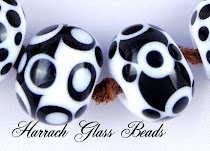
wine stoppers by Harrach Glass
Don't forget about using fused glass on wine stoppers. Wine lovers love these eye catching beauties. They also make great gifts for all occasions.


Wednesday, May 18, 2011
Specifying Stained Glass by the Stained Glass Association of America
This article, written about both leaded glass and faceted glass windows, has a lot of information for both stained glass artists and what to look for - for potential customers!
Stained glass is a general term covering all forms of
glass used in a decorative manner, primarily for windows,
but also for a myriad of secular uses prevalent today.
In as much as the stained glass craft is an adjunct of
architecture, this Association favors the principle of
architectural direction in the selection of artisans or studios
and the commissioning of stained glass projects.
Products of SGAA artisans are ideas and concepts
that are translated into site-specific designs satisfying the
requirements of the project, budget and schedule. We
believe that project success is better assured when a studio
is selected not on the basis of a “square foot” bid but
rather by virtue of artistic ability, imagination, past success
and, of course, willingness to work within the project
constraints of time and money. Consultation and design progress
review with the architect, client and artisan
should take place before construction documents are
complete. Early and regular review sessions are welcome;
such will save time and prevent the needless cost of
design adjustment.
Therefore, we believe that ideal conditions fostering
mutual confidence and the best practical procedure will
prevail when only one craftsman studies the problem
with the architect and client. Should such a craftsman fail
to provide a satisfactory solution, we believe that he
should withdraw, thus permitting another craftsman to
fully cooperate with the client.
If the prospective client wishes proposals from more
than one craftsman, we earnestly recommend the following
procedure:
1. A personal discussion is held with each craftsman
invited that determines the client’s likes and dislikes,
and to arrive at a general theme and style. If a special
sketch is required, the artist will then be able to create
the appropriate design.
2. The client makes known any budget restrictions. Any
one of our members will gladly assist in setting up a
practical budget.
3. The names of the craftsmen invited to make proposals
are made known to all concerned.
Consultation between architect, client and craftsman
should begin before contract documents are finalized.
Early cooperation will assure a well-integrated
design that considers all architectural, structural and
interior building elements.
Historically, SGAA artisans prefer that their agreement
be directly with the client, fully separated from the
general contract; however, all are vitally concerned with
the full satisfaction of the client and can adapt their
process to fit the project.
Leaded Stained Glass
The Process: The preparatory sketch is translated
into full-size mechanical drawings (cartoons) and further
into actual patterns to be used to cut the glass. Once the
patterns have been prepared and assigned color, the glass
is cut into the myriad pieces required to build the window.
When the design requires detail painting or ornamentation
of the glass surface, it must be done with pigments
designed specifically for stained glass. Once
applied, the pigment is fired in a kiln to the proper temperature
for the respective pigment, usually between
1000 and 1250 degrees Fahrenheit, thus assuring absolute
permanency. The pieces of glass are joined together with
lead came (H-shaped strips) and soldered at their intersections
on both interior and exterior surfaces of the
assembled panel of stained glass. Varying widths of lead
came are often used to add to the window’s decorative
effect as well as enhance its strength.
To prevent leakage, a mastic waterproofing material
is inserted between the glass and the flange of the lead
came. This process, often called “cementing,” is required
on both interior and exterior surfaces of the panel and is
paramount in weatherproofing as well as stiffening the
panel. It is recommended that panels be stored on a flat
surface for a minimum of two weeks prior to installation,
thereby allowing them to properly cure.
Reinforcing bars, regardless of the type, are typically
fastened or mechanically engaged at regular horizontal
intervals to the frame, sash or other substrate into which
the panel is installed. These surface-applied bars further
strengthen and support the installed panel of leaded
stained glass. Round bars usually measuring 3⁄8 inch in
diameter, tied to the panels with twisted copper wires, are
the most flexible and resilient, and therefore allow for the
greatest amounts of thermal movement. Where this system
is not suitable, galvanized-steel flat bars can be soldered
directly to the surface of the leaded glass panel.
Installation: It is recommended that leaded glass be
installed into frames designed specifically for that purpose.
Various types can be considered and include wood,
aluminum, steel, bronze and stone. Regardless of the type,
the most important consideration is that they are capable
of supporting the unique qualities of the type of stained
glass that is being installed. When possible, glazing beads
should be used in conjunction with modern, flexible
sealant systems to allow for flexibility as well as mechanical
engagement of the installed panels of glass.
The stained glass studio should be consulted as to the
best type of frame for the project at hand, the location
and placement of division bars, and mullion configuration
that will work best with the intended design. This
information should be finalized prior to ordering the
window frames or sash (usually supplied by the general
contractor on a new building) into which the stained
glass will be installed.
In general, the type of frame selected needs to be
capable of supporting stained glass weighing approximately
four pounds per square foot and configured with
mullions, allowing sub-division of larger areas into panels
of approximately 14 linear perimeter feet. In addition to
the overall structural requirements, the frames or sash
must include a glazing rebate that measures 3⁄8" to 1⁄2" wide
by 3⁄8" to 1⁄2" deep and allows the panels of stained glass to
engage into the frame or sash a minimum of 1⁄4". An
allowance of 3⁄32" to 1⁄8" between the stained glass panel and
Glazing Sealant: It is highly recommended that all
sealant be of the non-acetic gas-forming or neutral-cure
variety and that it be chosen based on the composition of
the materials and substrates to be sealed. Appropriate
bond-breaking tape and ethafoam backer rod should be
www.stainedglass.org www.SGAAOnline.com 3
used as required to achieve the flexibility necessary for
expansion and contraction of the finished installation.
Faceted Stained Glass
(Dalle de Verre)
Process: A twentieth-century innovation in the art
of stained glass introduced the use of glass dalles measuring
approximately 8" x 12" x 1". These dalles, cast in hundreds
of colors, can be cut into shapes and used, in combination
with an opaque matrix of epoxy resin 5⁄8" to 7⁄8" in
thickness, to create translucent windows and walls of
great beauty.
The epoxy used in the casting of faceted glass panels
must be a specially formulated slab-glass-setting compound
consisting of epoxy resin and hardener. The material
must be able to withstand temperatures of +130
degrees Fahrenheit on the exterior surface and a simultaneous
+70 degrees Fahrenheit interior surface (air conditioned),
and allow for humidity changes of 6% to 100%. In
addition, cast panels must be water resistant on tests of
25 lbs. per square foot static air pressure while 21⁄2 gallons
of water pass over the surface of the panel for one hour.
The design and physical opening size determine size
limitations. However, individual panels should not
exceed 16 square feet. The height to width of a single
panel should not exceed a 4:1 ratio. Large openings must
have horizontal supports to carry the weight of the
stacked panels. Thickness of the epoxy matrix should not
be less than 5⁄8" for unstacked panels. When they are to be
stacked, a minimum epoxy thickness of 3⁄4" is recommended,
with the joints between the panels sealed with a flexible
glazing sealant.
Installation: Faceted glass can be installed in openings
and mullions of masonry, metal or wood, provided
that the system is designed to receive the thicker panels
and carry the load of approximately 10 to 13 pounds per
square foot. The stained glass studio should be consulted
well in advance of finalizing the contract documents for
the appropriate frame type for the project and location of
any division bars and mullions, so as to coordinate them
with the design before ordering frames or sash.
Clearance of 3⁄16" is recommended between the frame
or substrate and panel edge to allow for proper expansion
and contraction of the completed panel. Neoprene spacers
(durometer 40 to 70) can be used as needed to insure
proper clearance.
Glazing Sealant: Faceted glass panels should be set
into a non-hardening material such as butyl, acrylic, silicone
or polysulphide sealant, which should be used both
as a bedding and finish bead. This will provide a weather tight
seal between the faceted glass panel and the frame or
substrate into which the panel is installed. For spaces of
more than 1⁄4" between the substrate and the panel, filler
such as ethafoam is recommended under the sealant bead
to allow for flexibility.
Protective Glazing
Exterior Protective Glazing: Properly made and
installed leaded, stained and faceted glass does not require
exterior protective glazing to make it waterproof; however,
if properly installed in conjunction with stained or leaded
glass, protective glazing may afford some protection against
vandalism and external damage. Because of its high resistance
to breakage, faceted glass does not need protective
glazing. If protective glazing is to be included as part of the
project, it must be decided early in the building program so
that proper framing and installation details can be developed
to eliminate many of the negative effects normally
associated with its installation.
Clear, laminated safety glass and tempered glass are
superior to acrylic or polycarbonate plastics as protective
glazing. The plastics craze and yellow in relatively short
periods of time, while glass remains clear, preserving a clean
appearance to the building exterior.
Current research dictates that protective glazing be
vented, thereby alleviating the possibility of excessive heat
buildup and the trapping of condensation. The specific
method of venting this enclosed space varies from installation
to installation due to many diverse conditions, ranging
from the type of frame system being used to the climatic
conditions and micro environment of the building. Before
considering the inclusion of protective glazing, it is advised
that the advantages and disadvantages as well as the appropriate
installation method be discussed with the stained
glass craftsman.
Protective glazing is sometimes installed as an afterthought
over existing stained glass windows and frames,
usually in such a fashion that is insensitive to the architecture
of the building and without regard for potential harm
to the stained glass. Systems of this type normally include
installing the glazing material in a bed of sealant or butyl
tape along with ethafoam backer rod and then face-glazing
the material with a silicone sealant. This system can be
detrimental to the stained glass and supporting frame and is
not recommended by the Stained Glass Association of
America. In the event protective glazing over existing
stained glass windows is determined to be a necessity, systems
are available to safely install the needed protection
with minimal disruption to the aesthetics of the building.
Please refer to the Stained Glass Association of America’s
Standards and Guidelines for the Preservation of Historic
Stained Glass Windows for further discussion of installation
of protective glazing.
In general, protective glazing should be installed in a
designed system originating concurrently with the stained
glass, not included as an afterthought. When included, it
should be installed in such a fashion that provides inter-cavity
ventilation between the interior installed stained glass
and the exterior installed protective glazing. The space
between the layers of glazing should be as close to 3⁄4" as conditions
allow. It is recommended that glazing materials,
regardless of type, be a minimum of 1⁄4" thick, installed in a
fashion that allows the material to freely expand and contract
within the system and that provides for mechanical
engagement of the material to the framing system.
Glazing Sealant: It is highly recommended that all
sealant be of the non-acetic gas forming or neutral-cure
variety and that it be chosen based on the composition of
the materials and substrates to be sealed. Appropriate
bond-breaking tape and ethafoam backer rod should be
used as required to achieve the flexibility necessary for
expansion and contraction of the finished installation.
Specifying stained, leaded and faceted glass — as well
as protective glazing — can be as much of an art as the creation
of the windows themselves. The requirements for
installation are in most cases unique to the material and the
project at hand and require considerable advance planning.
The guarantee for a timely and successful project is laying
the proper groundwork early on. Just as the foundation of a
building dictates its strength, consulting with a stained glass
artist before the building is started will lay the foundation
for a cost-effective and successful stained glass project.
Please feel free to contact one of our
members or the SGAA Administrative
Office, 800.438-9581, for assistance
with specific questions.
CONTACTING THE STAINED GLASS
ASSOCIATION OF AMERICA
THE STAINED GLASS QUARTERLY
RICHARD GROSS
EDITOR & MEDIA DIRECTOR
10009 EAST 62ND STREET
RAYTOWN, MO 64133
webmaster@sgaaonline.com
www.sgaaonline.com
www.stainedglass.org
800-438-9581
816-737-2090
816-737-2801 FAX
SGAA HEADQUARTERS
KATEI GROSS
EXECUTIVE ADMINISTRATOR
10009 EAST 62ND STREET
RAYTOWN, MO 64133
headquarters@sgaaonline.com
www.sgaaonline.com
www.stainedglass.org
800-438-9581
816-737-2090
816-737-2801 FAX
VISIT US ONLINE:
w w w.StainedGlass.org • www.SGAAOnline.com
Monday, April 25, 2011
Dalle de verre

The most successful and most widely accepted new technique in the world of stained glass today is dalle de verre, better known as faceted glass, which is set into epoxy or other material. Its process of production results in a mosaic-like approach of pure color effects that can be utilized in window openings or entire walls.
As John Gilbert Lloyd notes: "It returns to the primary function of stained glass to transform a wall from a solid unyielding object to a cascading, fluid mural of shimmering beauty. While the medieval craftsman, joining small pieces of glass with lead to make intricate designs, achieved the same effect for Gothic cathedrals, the earlier Byzantines transferred their mosaic patterns into colorful window designs." Present day development of the technique stems directly from this beginning."
Thick colored glass was first used in a decorative way by Byzantine artists, instead of embedding the glass in stone, pierced the walls clear through and set it in as window lights. Arabic type examples can be found in Spain, apparently finding their way from North Africa with the Muslim Invasion. Although the actual glass is no longer in place, the feathery stonework grills that remain definitely indicate they must have been filled with colored glass.
Both Persians and Saracens in the Eastern Mediterranean area, where the glass industry was born, set crude glass into wood, stucco and stone frames. With these examples the Gothic tribes moving west used similar applications in stone mullions in France during the fifth and sixth centuries. Viollet-le-Duc says in Vitrail, "In the East, things change but little and window screens of stucco and marble enclosing pieces of vari-colored glass which we find in monuments of the XIII or XIV centuries in Asia and even Egypt, must be the expression of a very ancient tradition whose cradle seems to have been Persia."
The Islamic law of prohibiting the use of human likenesses being depicted within the mosque, and simultaneously, the Christian practice of encouraging the use of figure likenesses of Christ -- the Apostles, angels and saints -- in all the decorative media of the church may have implemented the change to the thinner leaded glass medium.
The Middle Eastern antecedents of dalle de verre seem to have vanished for several hundreds of years, until the 1920s, when French glass artists, experimenting with various new architectural directions, revitalized the ancient techniques.
Early pioneers in the modern development of dalle de verre include Auguste Labouret and his collaborator Pierre Chaudiere. A prolific artist, Labouret studied at L'Ecole de Beaux Artsunder J. P. Laurens and created many windows for cathedrals, railroad terminals, department stores hotels and ships' dining rooms.
Labouret was born in St. Quentin, France and developed the dalle de verre technique in the early 30s while working on glass in historic monuments. The artist sought a combination of modern strength and durability with a depth of color found in old glass. The thickness, broken surface and cut edge gives dalle de verre its characteristically rich translucence. The negative matrix area that frames each pane of glass is visually much heavier than the lead in ordinary windows. This characteristic, as with the earlier Islamic pierced windows, enriches the color by creating a great contrasting brilliance. This juxtaposition of brilliant color and dark surrounds can be painstakingly achieved in flat leaded glass by elaborately painting or by a combination of etching and painting of flashed glass.
Dalle de verre lends itself best to direct and vigorous design. It is a broad medium that, generally, does not encourage copious detail. In the St. Christopher window that Labouret exhibited in the Pavilion du Vitrail in the Paris Exhibition of 1937, he demonstrated that it was not incompatible with figure work, delicate detail and even lettering.
A variety of forms could be seen at this 1937 Paris Exposition with the Egyptian Pavilion showing a typical Arabic style of glass pierced plaster encased windows in traditional patterns. This was supposed to be the real origin of faceted glass.
Variously called beton glass (beton glas), concrete glass or mosaic glass, the renewal started and by 1939 had crossed the Atlantic when a beton glass window was installed in the Chapel at the Shrine of St. Anne de Beaupre, Quebec, Canada. This was designed and fabricated by Auguste Labouret and is believed to be the first such panel in North America. In the same year, the French pavilion at the New York World's Fair featured the same "Magi" panel that had been completed in 1936.
"One of the Magi" is one of Labouret's later works (1936), showing a good example of size and contrast of the glass. Note particularly the individual blades of glass set together in undulating rows. This cutting effect could only be achieved by using a hammer. Notice the ornamenting on the garment itself, the flowers, sky and stars, and the glass rods used. Contrasting in size are the larger pieces in the garment and jewel box (note the treatment on the edging of the jewel box). The flesh seems to have been traced and a matted texture effects the shading somewhat differently from the effect in St. Hubert's work.
The English precis for the French article describing the window, "One Of The Magi", is "This stained glass window, exhibited in L'Illustration, illustrates a revolution which has taken place in the art of fashioning stained glass. It is the work of Labouret, who has evolved a daring new technique in the manipulation of translucent materials. His windows, indeed, carry us far from the traditional method of setting flat pieces of glass in leads in the manner that has been followed for centuries. By the use of thick slabs of glass which he sculptures, M. Labouret obtains a multiplicity of facets about which the lights play with a color and an intensity which suggest the fire of precious stones. It is impossible to deny the remarkable effects he achieves by means of this new method, and it is easy to imagine the wealth of decoration, which it may, in the future, confer on our churches and cathedrals. The several slabs of glass, it may, perhaps, be added, are held together with cement." [Labouret's earliest work appeared in print in 1930 illustrating the steps of execution of the center section of the St. Hubert window. The complete window appeared in the Christmas, 1936 issue of L'Illustration.]
Also, in the 1937 Egyptian Catalogue from the Paris Exhibition, there is a window, "L'apprenti Sorcier" (Sorcerer's Apprentice) which stands the test of time very well. This is by Jean Gaudin and contains 16 panels with vignettes of the story running bottom to top. While there are indications of pate de verre influences, it is a stunning window by any standard. (Pate de verre is a cast sculptured window; all the surface details are sculpted in a mold then the hot glass is poured into it. All the cast pieces are then assembled using cement as a matrix. It is possible that dalle de verre and pate de verre developed simultaneously as they have similar surface treatments.)
It was not until the end of World War II that faceted glass use became more accepted, and even then, it was an evolutionary process. The pent-up demands for new buildings in the United States and Europe after the war proved a fertile ground for the material, which was relatively easy to fabricate, comparatively inexpensive yet produced windows of brilliant color.
But, as Lloyd states, "Not until the completion of Sacred Heart Chapel in Audincourt, France(1951_1955) did the full appreciation of the form strike home. This large installation has been billed as the finest in France with the windows completely dominating the atmosphere. It is a concert in color, rhythm and visual harmony."
By 1950, additional windows had been fabricated and installed by Labouret for the St. Anne de Beaupre in Quebec, Canada. The complete job called for over 200 windows of which he had completed and installed 30.
The work, St. Luke, from the circle window from the Basilica of St. Anne de Beaupre, Quebec, Canada, shows advancement of the dalle de verre concept. The cutting is sharper, giving a crisper look to the window; there is ample use of negative space. The stars in the background seem to have become Labouret's trademark. The small amount of trace-like material used to delineate the nose, mouth, and ear of St. Luke, as represented by a winged ox, are surface treatments which are no longer used in this medium.
As news of these windows spread, it wasn't very long before Henry Lee Willet of Philadelphia, who with several contemporaries, visited St. Anne to view them first hand. Willet remarked: "I was fascinated by the windows being installed; Labouret has developed an entirely new technique. He uses pieces of glass four to six inches thick which are held together by cement instead of lead. I thought the windows were the work of a young artist and commented to a priest at the shrine that it took youth to think of a new approach. When the priest told me that Labouret was 78 years old I realized the windows were even more amazing. Here is a man developing new techniques at an age when most men have retired." Willet was impressed both by the man and the work, so he immediately contacted Labouret and arranged for an exhibition of his work at the Philadelphia Art Alliance for the fall of 1950, which was reported in the December, 1950 Alliance Bulletin. The exhibition included colored renderings, full size cartoons and finished pieces of dalle de verre. It expressed first-hand the media and all its potential to the American stained glass profession.
Lloyd points out that, "American studios cautiously entered the field with a few minor commissions forthcoming. Then came the revolutionary First Presbyterian Church, Stamford, Connecticut." Constructed in a form that resembled a gigantic fish, (although the architect claims this was not done consciously but rather for acoustical effects), it is said to be one of the most powerful modern churches in the world. Great walls of faceted glass designed and executed by Gabriel Loire of France literally saturated the interior with overpowering color. Controversy raged, as might be expected, but it led the way to new concepts and thinking in church design. The First Presbyterian Church, Stamford, CT provided the springboard for American studios to abandon traditional taboos and energetically make up for lost time.
The first American studio to design, fabricate, and install dalle de verre was that of Harold W. Cummings of San Francisco, California. The year was 1954 and the location was Belvedere, California for the St. Stephen's Episcopal Church. The media described as Vitrolith by Mr. Cummings was cast in concrete. The installation consisted of 12 nave windows approximately 17 by 144 inches in a vertical design with 72 smaller rectangular openings scattered in a starry-like clerestory.
Roger Darricarrere, a former pupil of Labouret joined Cummings on this project as a specialist familiar with the process. The design throughout is of an abstract nature consisting of soft tints of color accented by powerful bands of rich color. The glass was hammer cut as practiced by Labouret with the design boldly approached.
Among early prominent dalle de verre projects is architect Edo Belli's Moreau SeminaryChapel and Library designed by Father Anthony Lauck of the Notre Dame University Art Department and fabricated by Conrad Schmitt Studios. The monumental window walls admit a virtual lacework of colored light. The deeply recessed glass set in cement resembles a sculptured bas-relief of sparkling jewels.
Father Lauck describes the dalle de verre concept by saying: "Some materials have a more marked character about them than others. Among these is dalle de verre. Not only is it deeply translucent, but it transmits light in clear brilliant colors. The thickness gives more depth and intensity to its color. The unusual means of shaping it by chiseling adds to its character. Hammer cutting fractures the glass in uneven sizes with notched and somewhat jagged edges. Faceting the edges breaks up the surfaces with shell-like ripples and facets, which brings out forcefully the crystalline angular structure of the glass. Each broken facet transmits its own hue, catches a different angle of the sun's rays or the sky's brightness and brings a varied pattern of sparkling light into the window. It is precisely this unique and individual charm of slab glass that appeals to artists, connoisseurs and patrons alike -- and many priests and religions may be ranked among these."
The material used to glaze early dalle de verre was a Portland cement. In order to use this material properly, it was necessary to pour to a thickness of one to two inches on moderate sized panels and to a thicker size on large panels. The pieces of glass used to make a panel ranged from two to six inches in thickness; it called for a thick pour of cement to produce a panel properly. In addition, the weight per panel was considerable. Cement also requires that a wire armature be incorporated into the panel for reinforcement against breaking while the thickness of the pour required that the cement be adequately cured before moving. Curing panels (the process of letting the cement settle and harden properly), required additional wetting of the panels lest the cement dry out too quickly and crack. Finally, considerable clean up was involved once the cement was dry.
Moving a 500-pound panel up six frames of scaffolding for installation required a hearty crew of men and a crane. Proper placement and adhesion was needed to allow the panel to expand and contract within the installation frame to prevent breaking. A proper sash was also essential to receive the panel and the thickness and weight of the panel necessitated that it be a substantial one. It became apparent that Portland cement did not have adequate adhesion to the glass and it was not uncommon for the cement and the glass to separate. Water could seep through and around the panel. When the cement was cast several times thicker than the glass, various internal stresses could cause the glass to suffer fractures. There were problems, shortcomings and limitations in using cement. Since it had been used from the beginning, many windows were cast from it, but now some began to seek a better matrix.
The search for a better matrix took some interesting turns. Some studios experimented with additives to various types of Portland cement. About then, Sauereisen Acid resistant cement#54 surfaced. Apparently this material was formulated as a coating for surfaces that were exposed to various types of acids. Its use as a dalle de verre matrix was interesting. The cost was relatively low and it was a lot easier to use than the regular Portland cement. It cured in 24 hours and was lighter than regular cement. However, it did not have much strength and required a wire armature and larger panels. The recommended thickness of a pour on a moderate sized panel was one inch. It was only available in white and its use with dalle de verre was limited. Then, Robert R. Benes of St. Louis, Missouri, had a better idea.
Epoxy resin was initially formulated to serve as a lining for the oil pipeline divisions of Mobil Oil Company. By coating the inside surface of the pipe with epoxy, any fuels passing through the line received less friction and incurred less heat buildup. This required less force from a pump to move the material. Epoxy was being tried experimentally on many applications. Bob Benes, working with the Jacoby and Frei Studios in St. Louis, formulated a special blend of the material for trial in replacing cement in dalle de verre windows. Several panels were poured of various sizes and thicknesses as directed by Benes. These were subjected to tests for tensile strength, expansion, contraction, warpage, longevity and the like. The subsequent evaluations showed that epoxy was by far superior in all ways to cement. It required less time for preparation, mixing, pouring and cleanup. It required no type of armature. It had a similar rate of expansion and contraction as the glass. When poured to a three-quarter inch thickness, a panel of 12 square feet could be handled by two men with little fear of breaking. It could be seeded with all kinds of aggregate for surface treatment; it cured for handling in twenty-four hours and cured completely in five days. It came in many colors. It was a very durable, strong and waterproof product, with great adhesion to glass.
Epoxy was magic stuff and though the cost per gallon was relatively high, it was just what the craft had been looking for. Epoxy and dalle de verre were joined from that day on. Benes applied for a patent and began formulating and selling this material to American studios. He traveled extensively to demonstrate the proper methods of mixing and using the material. Special formulations were made for special situations and special colors were mixed. If a studio had a problem using cement or another's formulation, Benes always complied when called on for help.
Robert Benes traveled abroad and pioneered the use of dalle de verre set in epoxy to the masters of Europe who had always used cement. There were other formulators who soon began offering their product in competition. Some were terrible, some mediocre, but few were as good as Bob Benes' Benesco.
Many thanks to Shaw Creek Bird Supply for posting this very detailed and interesting material on dalle de verre. http://www.shawcreekbirdsupply.com/stained_glass_dalle_de_verre.htm
Many thanks to Shaw Creek Bird Supply for posting this very detailed and interesting material on dalle de verre. http://www.shawcreekbirdsupply.com/stained_glass_dalle_de_verre.htm


Subscribe to:
Posts (Atom)
Subscribe To The Blog


 Posts
All Comments
Posts
All Comments