







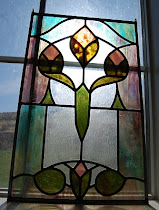


Photo above from the LavaCloth webpage photo gallery.
Product Information:
1. Lava Cloth is 100% American Made, including all components, providing the highest possible quality.
2. Lava Cloth does not stick to glass, kiln shelves, kiln brick, or fiber board. Place Lava Cloth directly on the surface you wish to fire on, then place glass on the Lava Cloth and fuse.
3. Lava Cloth is non-carcinogenic. Lava Cloth is a fiberglass product with the standard warnings for fiberglass materials. These warnings are: Contact with fibrous glass many cause temporary irritation. Wear long sleeve loose fitting clothing when handling any fiberglass material. Gloves and eye protection may be appropriate in certain applications. Wash with soap and warm water after handling. Wash work clothes separately and rinse out washer. A disposable mask designed for nuisance type dusts may be advisable when high dust levels are present.
4. Lava Cloth is tan or black in color prior to firing turning white after firing. On some occasions you may have an odor and may see white powder (a silicon byproduct) on the kiln shelf with the first firing. These are non hazardous and the powder does not stick to glass. If your kiln has a glass view window you may see a white coating after several firings this simply wipes off.
5. Artists using art glass usually achieve 10 + firings at 1350 - 1485°F before the Lava Cloth starts to breakdown - it becomes fuzzy or simply breaks apart. Artists using float glass firing up to 1600°F obtain about 5 – 6 firings before breakdown. Discard used Lava Cloth in regular trash when it no longer provides the finish you wish. There is NO messy or hazardous cleanup with Lava Cloth. When one side breaks down you may get 1 - 4 firings on the backside before it breaks down.
Instructions:
1. Lava Cloth easily cuts with good scissors or a fabric roller knife, looks like a pizza cutter but is for cloth. Store Lava Cloth flat or rolled. Do NOT fold it. A tight fold will leave a crease which will not go away.
2. We recommend pre-firing Lava Cloth. This schedule works: Ramp at 500°F / hour to 1400°F soak for 10 minuets. Shrinkage occurs with the FIRST firing, a 12” square will shrink to an 11 3/8” square and a 24” square will shrink to a 22 ½” square.
3. Do NOT fire Lava Cloth above 1650 °F. Firing above this temperature glass becomes molten and penetrates deep into the Lava Cloth. You will not be able to separate the Lava Cloth from the glass. NOTE: Once glass has been fused on Lava Cloth you cannot fire polish or refuse to get rid of the texture should you want to redo the glass.
4. When fusing directly on Lava Cloth glass will expand then during the cooling down phase glass contracts. During the cooling phase the glass contracts but tends to stay in the weave of the Lava Cloth. The Lava Cloth does not move with the glass; thus the glass tends to curl upward at its edges. If you are going to slump the glass after fusing the curled edges may not matter. If you want the glass to remain flat then weight the Lava Cloth edges to hold it in place permitting the glass to retract out of the Lava Cloth weave at the edges thus stopping the curl. Small jewelry pieces usually do not curl when fired on a large piece of Lava Cloth.
5. Lava Cloth and fused glass MUST cool down to room temperature before separating otherwise the Lava Cloth will not tolerate many firings or it may even tear apart if too warm.
6. If the glass has too rough of a texture simply buff the glass with a diamond pad under running water and the roughness will easily and quickly change to a smoother texture. Some glass will sink deeper into the weave than others; this is due to variations in stiffness of the glass and varies from color to color. Fusing at high temperatures may cause the edges of the glass to be jagged.
7. If you want to reduce the amount of texture you can sprinkle dry kiln wash directly on the Lava Cloth using a flour sieve. This will fill the deeper portions of the weave and reduce the degree of texture. Then fire directly on top of this.
8. If you fire iridized glass with the iridized side down on the Lava Cloth you will get the texture plus the iridized surface will remain bright and shiny. The iridized surface is stiff and does not sink deep into the Lava Cloth. If you fire clear glass on Lava Cloth you will get a prism effect from light passing through the glass.
9. You can cut Lava Cloth into various shapes and patterns place it on top of glass with a weight on the Lava Cloth and press the texture into the top surface of the glass resulting in patterns of texture mixed with the smooth fused glass surface.
10. The textured surface will provide a good surface to glue bails or pin backs for jewelry. The textured surface will also assist mosaic artists and tile artists in gluing their glass pieces in place.
11. When box casting and lining the inside of the box with Lava Cloth provides a textured appearance reducing cold finish time.


 Posts
Posts




No comments:
Post a Comment